
Why So Many Graduates Struggle in Interviews Despite Having Huge Potential
Apr 15, 2026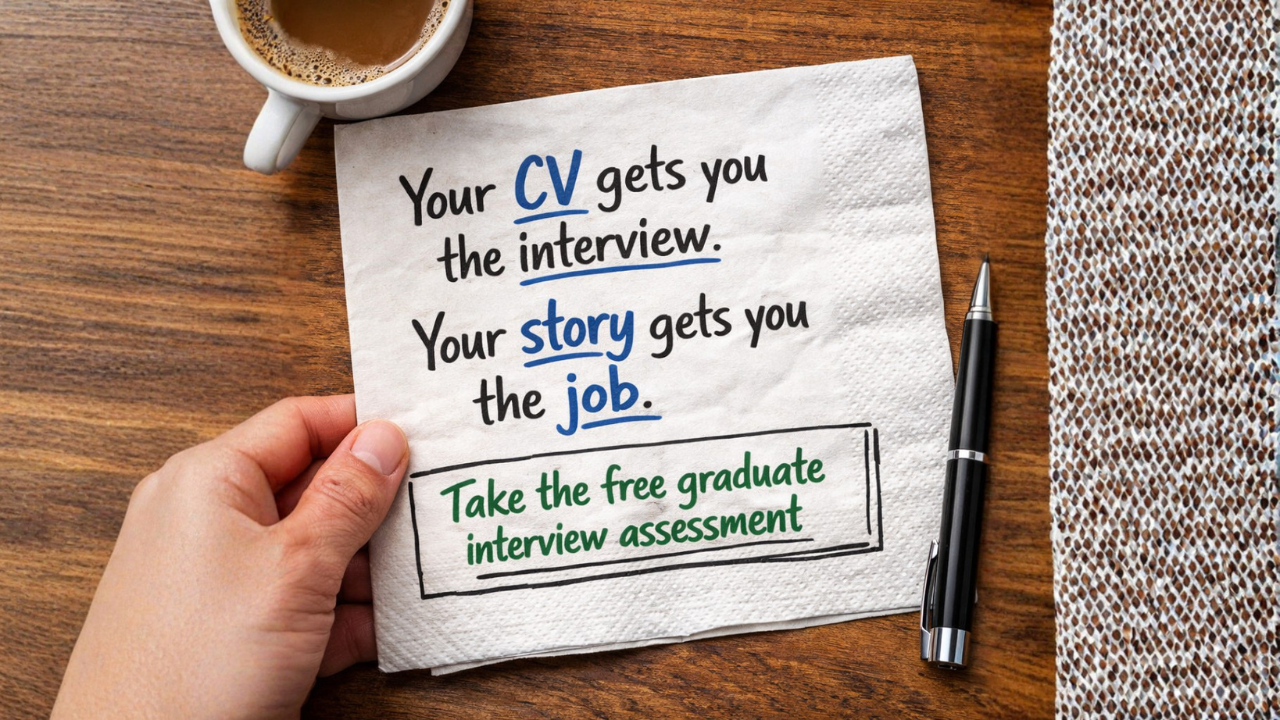
If this sounds familiar…
- you’re a graduate trying to land your first real job
- you’re a parent supporting a son or daughter through the process
- or you know someone capable who just cannot seem to “show it” in interviews
…then this may resonate.
Because after years of conversations, one pattern keeps appearing again and again:
Most young people do not struggle in interviews because they lack potential.
They struggle because they do not know how to communicate it.
That is the real issue.
The Problem Is Rarely Ability
Over the years, I’ve had countless conversations with parents saying things like:
“Can you help my son?”
“Can you help my daughter?”
“They’re capable… they just don’t interview well.”
And honestly?
Most of the time, they’re right.
The ability is usually there.
The intelligence is there.
The work ethic is there.
The potential is there.
But when interview pressure kicks in, many graduates struggle to:
- explain their experiences clearly
- communicate confidence naturally
- structure answers effectively
- show their thinking
- connect their experiences to real business value
And because of that, they often get underestimated.
Why Interviews Feel So Difficult for Graduates
The challenge is that most graduates have never been taught how to translate their experiences properly.
They’ve done more than they realise:
- university projects
- part-time jobs
- volunteering
- leadership roles
- team collaboration
- problem-solving
- independent learning
But they often describe these experiences too vaguely.
For example:
“I worked on a university group project.”
Sounds ordinary.
But underneath that might actually be:
- leading a team under pressure
- solving communication breakdowns
- organising deadlines
- presenting ideas confidently
- adapting when things went wrong
Same experience.
Different interpretation.
That’s the gap.
Young People Don’t Need Rescuing
This is the important part.
Young people do not need rescuing.
They need to build the muscle.
The ability to:
- explain what they’ve done clearly
- turn effort into evidence
- communicate impact confidently
- show thinking, not just outcomes
- connect their story to opportunity
Because those are career skills.
And once they learn them, everything changes.
The Skill Most People Never Learn
In my world, whether it was:
- working on global entertainment franchises
- building brand narratives
- helping global leaders position themselves
- developing personal brand strategies
…the same principle always applied:
It’s not just what you’ve done.
It’s how you frame it, structure it, and deliver it.
That is what people remember.
And interviews work exactly the same way.
Employers are not simply assessing experience.
They are assessing:
- communication
- self-awareness
- confidence
- clarity
- thinking
- potential
And stories are often what reveal those things best.
Why Storytelling Matters in Interviews
Graduates often think they need “better” experiences to stand out.
Most of the time, they don’t.
They simply need better translation.
Because the difference between:
- forgettable answers
- and memorable answers
…usually comes down to structure.
The graduates who stand out are often the ones who can:
- explain situations clearly
- communicate their role confidently
- show how they think
- articulate lessons and impact
That is what builds trust quickly in interviews.
The Graduate Interview Story Assessment
That’s exactly why we built the Graduate Interview Story Assessment.
It was born from the broader Interview Story Assessment tool after seeing how many young people were struggling with the exact same issue.
The goal is not to give scripted answers.
It’s to help graduates:
- identify where they get stuck
- improve how they communicate experience
- structure stronger interview answers
- build confidence through clarity
Because confidence usually grows when people finally understand how to articulate their value properly.
This Is Not a Shortcut
And importantly…
This is not a shortcut.
It’s a starting point.
A tool to help graduates begin understanding:
- how they communicate
- where they lose clarity
- how to tell stronger stories
- how to make their potential more visible
Because talent alone is rarely enough.
People need to understand it too.
Try the Graduate Interview Story Assessment
If you’re curious, or know someone who may benefit from it, you can find the Graduate Interview Story Assessment below.
Access the Graduate Interview Story Assessment here:
Take care
Marc Maley
Founder, My Brand Academy